
I built a Bitcoin treasury leaderboard in 24 hours using Rails 8, seeded 200+ companies with Claude Code, and deployed with one command. Total cost: ~$265/mo. Here’s the full breakdown.
I Vibe Coded a Bitcoin App in 24 Hours
Disclaimer: Rails is my main language. Some call it “the boring stack.” I call it the stack that ships.
I’ve been coding Rails for years. It’s not sexy. It doesn’t get Twitter hype. But it works. Rails has been here for 20 years, battle-tested by millions of apps. Every problem has a gem. Every pattern is documented. Full stack: handles front AND back seamlessly.
Don’t reinvent the wheel when the wheel has been rolling for two decades.
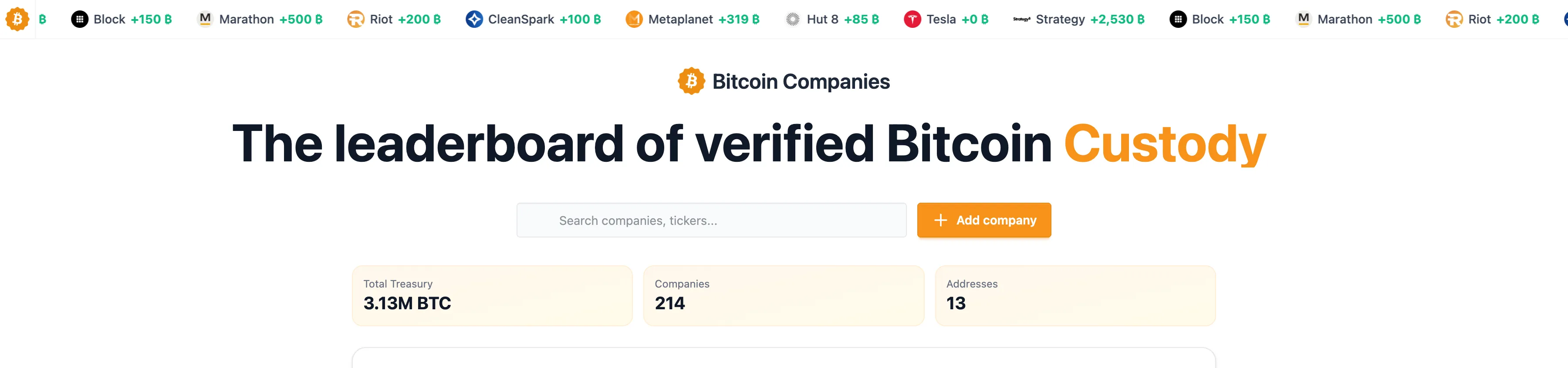
This is Bitcoin Companies - a verified Bitcoin treasury leaderboard I built in 24 hours:
Why I Built This
The Backstory
I was working on Hongbao Bitcoin, but it wasn’t getting traction. Social media marketing led to posting fatigue - constantly creating content, chasing algorithms, hoping for virality.
So I decided to fully focus on one marketing channel that paid off on my previous projects: SEO.
I got inspired after watching this talk about building a business through SEO:

The approach: create something useful, optimize for search, let Google do the distribution. No posting fatigue. No algorithm games.
The Problem
Companies claim “We hold X BTC” with zero proof.
- No on-chain verification
- No public addresses
- Trust-based claims in a trustless industry
The irony is painful. Bitcoin exists because “don’t trust, verify.” Yet corporate treasuries operate on pure trust.
The Inspiration
Marc Lou built TrustMRR - verified MRR badges for SaaS founders. Stripe connects, revenue verified, badge displayed. No more fake screenshots.


Same concept applies to Bitcoin treasuries. Don’t trust the press release. Verify the blockchain.
The Gap
bitcointreasuries.net lists companies but no verification. Anyone can claim anything. The data exists, but there’s no proof layer.
I needed a leaderboard with PROOF. On-chain verification. Public addresses. Cryptographic signatures.
Building the Dataset with Claude Code
The Challenge
I’m not known in the Bitcoin space. Manual data entry for 200+ companies would take weeks. I needed to launch with real data, not an empty app.
Existing sources:
- bitcointreasuries.net - comprehensive list
- bitcoinquant.co - additional data points
Claude Code to the Rescue
I used Claude Code to parse and structure data from multiple sources:
$ bin/rails db:seed

Seeding companies from bitcointreasuries.net...
  Created: MicroStrategy (MSTR) - 450,000 BTC
  Created: Marathon Digital (MARA) - 44,394 BTC
  Created: Tesla (TSLA) - 9,720 BTC
  Created: Coinbase (COIN) - 9,480 BTC
  Created: Block Inc (SQ) - 8,027 BTC
  Created: Riot Platforms (RIOT) - 7,362 BTC
  ...
  Created: Swan Bitcoin - 215 BTC
  Created: Unchained Capital - 187 BTC

✓ 214 companies seeded successfully
✓ Total treasury: 3,135,847 BTC
The workflow:
- Feed Claude Code the source data
- Generate structured seed files
- Cross-reference for accuracy
- Human verification pass
- Import to database
Result: 200+ companies seeded in hours, not weeks.
# db/seeds/companies.rb - Generated with Claude Code
companies = [
  {
    company_name: "MicroStrategy",
    domain: "microstrategy.com",
    ticker: "MSTR",
    claimed_btc: 450000,
    company_type: "software"
  },
  # ... 200+ more
]
AI accelerates the boring parts. Human verification ensures accuracy. Launch with real data, not an empty app.
The Blog: Why Not Ghost or Webflow?
I considered the usual options:
| Platform | Pros | Cons |
|---|---|---|
| Ghost | Nice editor, built-in SEO | Separate system, $9-25/mo |
| Webflow | Beautiful designs | Less dev control, $14+/mo |
| Headless CMS | Flexible | More complexity, API calls |
What I Chose: Sitepress + Markdown
The blog lives in the same Rails app. No separate system. No API calls. No extra hosting costs.
- Claude Code for fast iteration - Write content, deploy, iterate
- Full custom layouts - No platform limits
- Markdown files - Version controlled with git
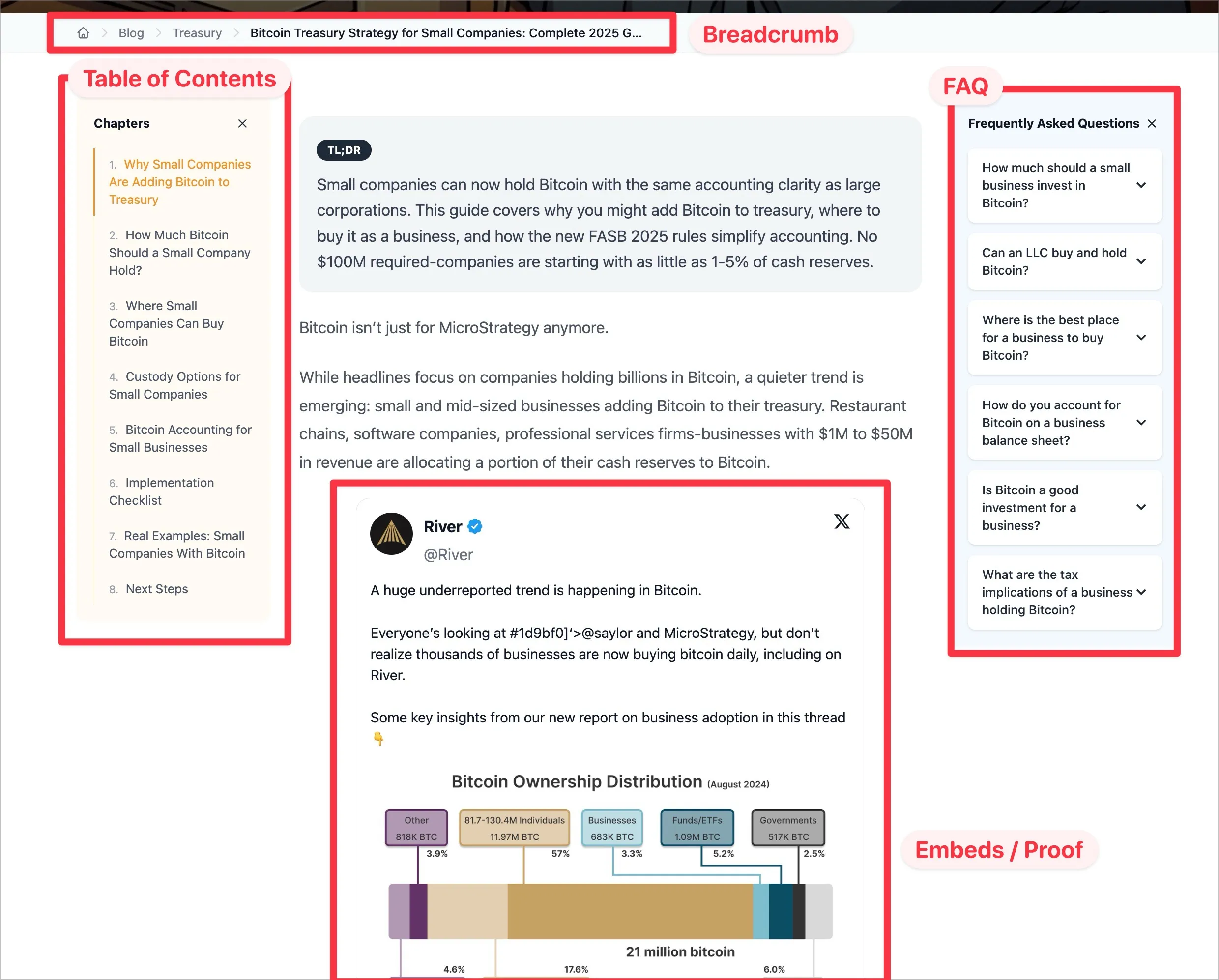
- SEO fully under my control - Meta tags, structured data, everything
# app/content/pages/blog/my-article.html.md
---
layout: post
title: "My Article Title"
description: "SEO description here"
---

Article content in markdown...
One codebase. One deploy. Full control.
Why Ruby on Rails (The Boring Stack)
Don’t Reinvent the Wheel
Rails has been here for 20 years. The wheel has been rolling smoothly.
- Every problem has a gem
- Every pattern is documented
- Full stack: handles front AND back seamlessly
- Same applies to PHP/Laravel - mature stacks win
I didn’t need to choose between 50 npm packages. I didn’t need to debate state management. I just built features.
SEO Out of the Box
Server-side rendering by default. Google indexes complete HTML. No hydration. No “loading…” spinner.
| Feature | Rails/PHP (SSR) | React SPA |
|---|---|---|
| SEO | Works by default | Requires Next.js/SSR |
| Google sees | Complete HTML | Empty div + spinner |
| Time to content | Immediate | Wait for JS |
| Complexity | Low | High |
React SPAs render in the browser. The server sends an empty HTML shell, JavaScript downloads, executes, fetches data, then renders. Search engines see nothing useful on first load.
Rails renders HTML on the server. The page arrives complete. Google indexes everything. Users see content immediately.
My Exact Tech Stack
| Layer | Technology | Why |
|---|---|---|
| Backend | Rails 8.1.2, Ruby 3.2.8 | Latest Rails with Hotwire default |
| Database | SQLite3 | Simple, fast, no ops overhead |
| Frontend | Stimulus + Turbo | No build step, native Rails |
| CSS | TailwindCSS v4 + DaisyUI v5 | Rapid UI development |
| Assets | Propshaft + Importmap | No Webpack/esbuild complexity |
| Payments | BTCPay Server | Self-sovereign Bitcoin payments |
| Deploy | Kamal 2 | One command Docker deploys |
SQLite in Production?
Yes. SQLite works excellently for read-heavy applications. 37signals (the creators of Rails) run SQLite in production for several products.

For a leaderboard with occasional writes and many reads, SQLite eliminates:
- Database server management
- Connection pooling complexity
- Separate backup procedures
- Monthly hosting costs
The database lives in a single file. Deployment is simpler. Backups are trivial.
SEO: Why Server-Side Wins
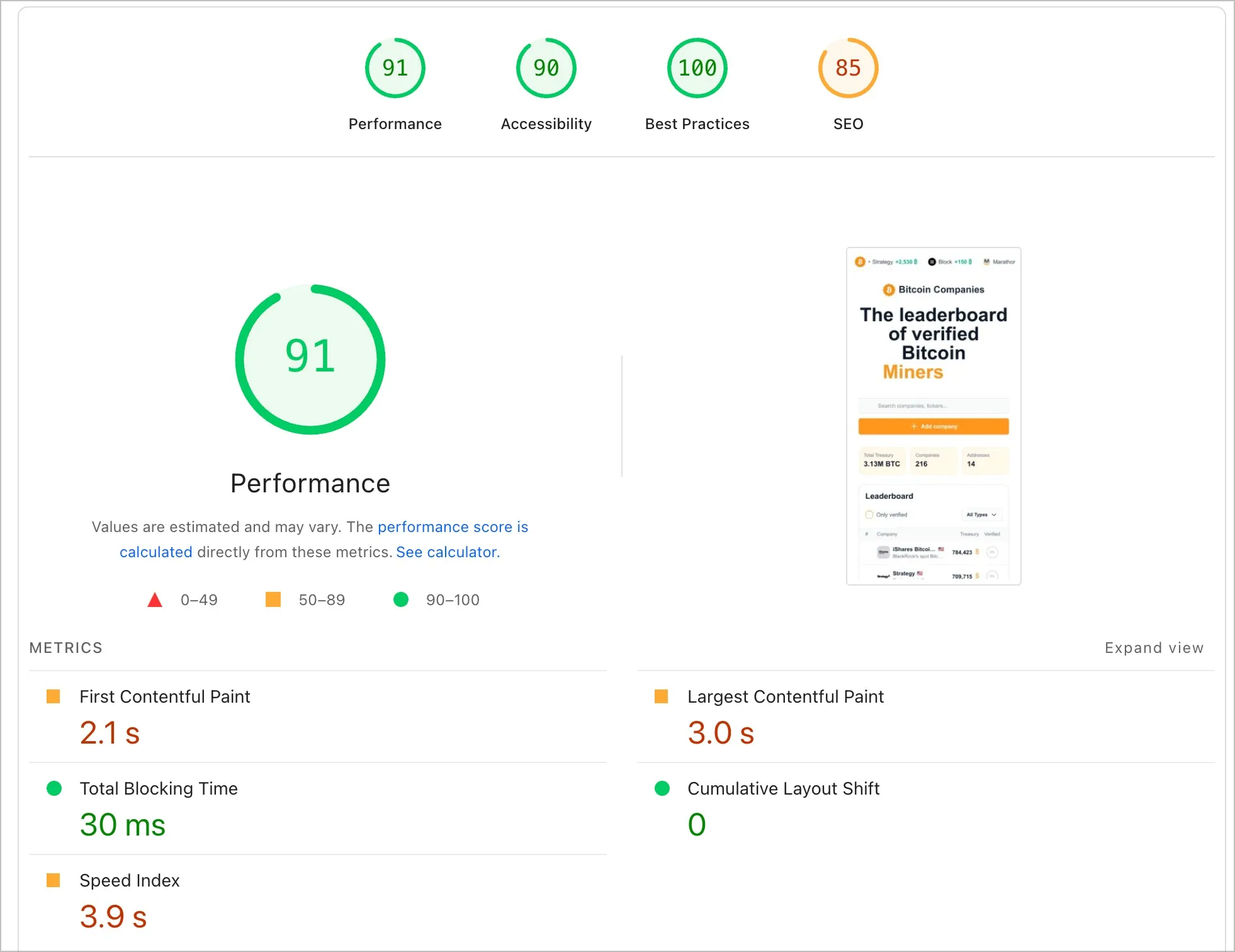
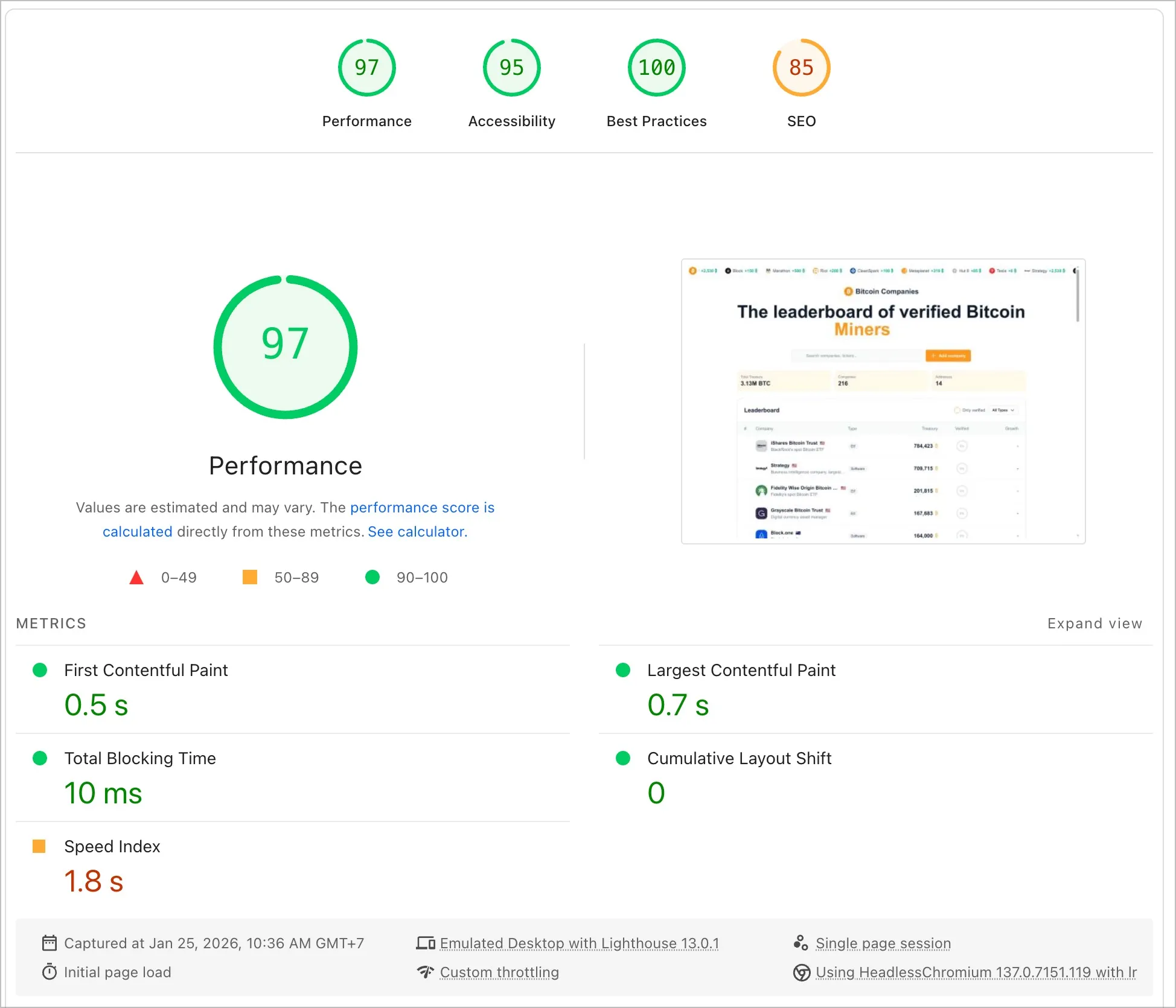
PageSpeed Scores
Without doing any optimization :
The SEO Advantage
Rails renders HTML on the server. The page arrives complete. Google indexes everything. Users see content immediately.
No hydration delays. No layout shifts from client-side data fetching. No “loading…” states indexed by Google.
vs React/Next.js
React has a complexity tax:
- 50 npm packages vs
rails new - State management debates vs Rails conventions
- SSR configuration vs server-side by default
- Build tool complexity vs zero config
I’m not anti-React. It’s excellent for highly interactive apps. But for SEO first app, Rails wins on every metric that matters.
Deploying with Kamal
Kamal is a Docker-based deployment tool from 37signals. Built into Rails 8.
bin/kamal deploy
# That's it.
What Kamal Does
- Builds your Docker image locally
- Pushes to a container registry
- SSHs into your server
- Pulls the new image
- Performs a zero-downtime swap
- Cleans up old containers
Time from commit to production: ~2 minutes.
No CI/CD pipeline to configure. No Kubernetes. No managed platform lock-in.
Bitcoin Integrations
BTCPay Server for Payments
Companies pay $0.50 in BTC to register. Self-sovereign payments, no payment processor.
# app/services/btcpay_service.rb
class BtcpayService
  def self.create_invoice(email:, xpub_id:)
    body = {
      amount: "0.50",
      currency: "USD",
      checkout: {
        defaultPaymentMethod: "BTC",
        redirectAutomatically: true
      }
    }
    # Returns invoice with checkout URL
  end
end
BTCPay handles the payment UI, exchange rate conversion, and confirmation tracking.
Balance Verification - The Journey
First attempt: Ledger’s xpub-scan

Problem: Quickly hit threshold/rate limits. Fine for personal use, not for scanning 200+ companies. + Unmaintained as public archive
Solution: CryptoAPIs HD Wallet API ($40/mo)
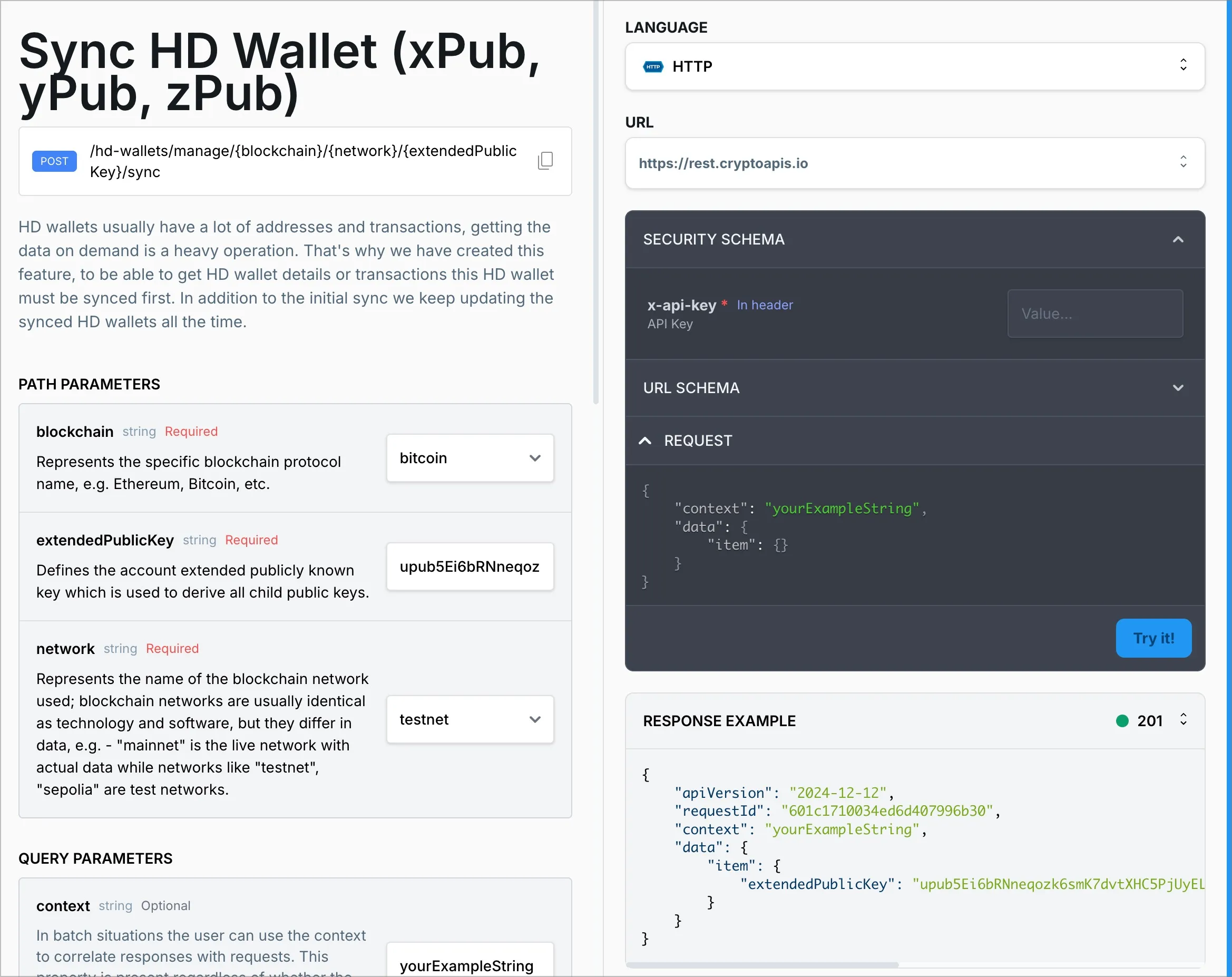
Now handles xpub balance lookups reliably. Worth every penny for production use.
# app/services/crypto_api_service.rb
class CryptoApiService
  def self.fetch_xpub_balance(xpub)
    # Syncs HD wallet and returns total balance
    # Handles ypub, zpub, xpub formats
  end
end
Total Cost Breakdown
Monthly Running Costs
| Service | Cost | Purpose |
|---|---|---|
| Hetzner VPS | $5/mo | Hosting (Rails + SQLite + BTCPay) |
| CryptoAPIs | $40/mo | HD Wallet / xpub balance lookups |
| RankerFox | $20/mo | SEO tracking & keyword research |
| Claude Code Max | $200/mo | Development (vibe coding) |
| Total | ~$265/mo |
What’s Free
- Domain: ~$10/year (one-time)
- BTCPay Server: Self-hosted
- SSL: Free built-in with Kamal
- Email: Mailgun free tier 100 emails / day
Compare to Typical SaaS Stack
| Service | Cost |
|---|---|
| Vercel Pro | $20+/mo |
| Supabase/Planetscale | $25+/mo |
| Auth0 | $23+/mo |
| Total | $70+/mo minimum |
And that’s before any Bitcoin APIs.
The Claude Code ROI
$200/mo sounds expensive. But:
- Built entire app in 24 hours
- Traditional dev time: weeks
- Ongoing iteration: hours instead of days
It pays for itself in speed.
Key Sources
Data Sources
- bitcointreasuries.net - Company treasury data
- bitcoinquant.co - Cross-reference data
Inspiration
- TrustMRR by Marc Lou - Verified MRR badges
- SEO-first business building - Growth through search
Rails and Deployment
- Ruby on Rails - Framework documentation
- Hotwire - Turbo and Stimulus
- Kamal - Docker deployment tool
Bitcoin Integration
- BTCPay Server - Self-hosted Bitcoin payment processor
- CryptoAPIs - HD Wallet API
Performance
- PageSpeed Insights - Google’s performance tool

Built BitcoinCompanies so my kids can learn Bitcoin on a map full of 🐉 🐋 🐳 🦈 🐬 🐙 🐠 🦀 🦐.
Turns out adults like it too.