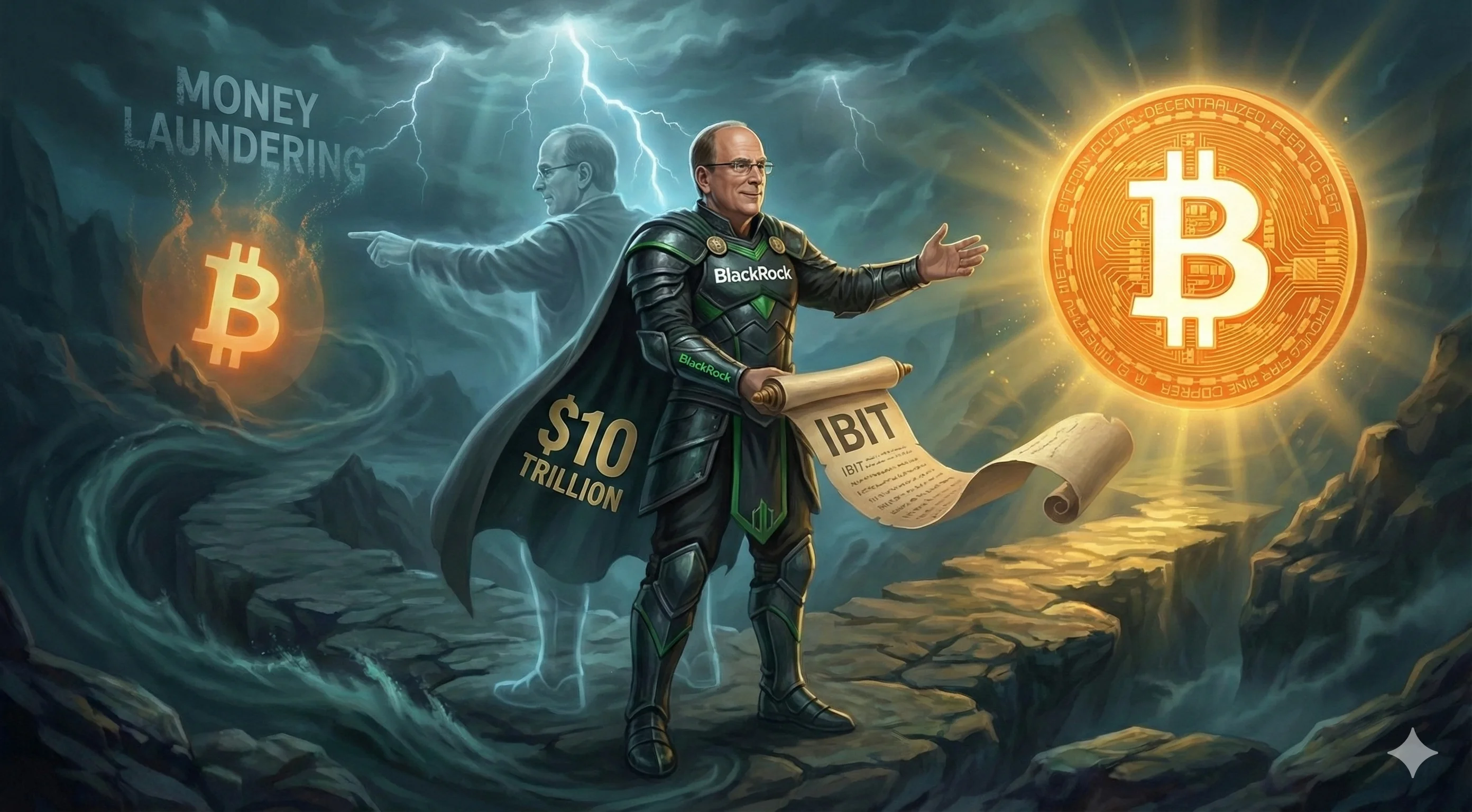
For three decades, Larry Fink had built the most powerful fortress in all of finance.
BlackRock. Ten trillion dollars under management. The silent hand behind pensions, endowments, sovereign wealth. When Fink spoke, markets listened. When BlackRock moved, the world followed.
And in 2017, Fink had declared Bitcoin unworthy of the realm.
Yet here he stood in January 2024, opening the gates of his citadel to the very asset he had once dismissed as “an index of money laundering.”
This is the story of how the king of traditional finance bent the knee to Bitcoin.
Oct 2017: The Dismissal
BTC: $4,000
In 2017, Bitcoin was a curiosity trading at $4,000—a plaything for libertarians and technologists, dismissed by the lords of Wall Street as beneath consideration.
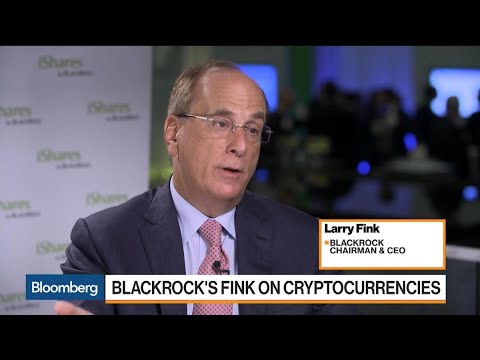
Larry Fink, architect of BlackRock’s dominance in passive investing, saw no place for it in his realm. At the Institute of International Finance, he delivered his verdict:
“Bitcoin just shows you how much demand for money laundering there is in the world.”
The words carried the weight of absolute certainty. From the man who commanded more capital than most nations, this was not mere opinion—it was dismissal. Exile. Bitcoin would not pass through BlackRock’s gates.
His skepticism was the orthodoxy of traditional finance. Too volatile. Too unregulated. Too dangerous. The old kingdoms of Wall Street stood united in their contempt.
But beneath the surface, something was stirring.
2020: The Whispers
BTC: $9,000-29,000
By 2020, the whispers had grown too loud to ignore.
Michael Saylor had begun his legendary accumulation—tens of thousands of Bitcoin flowing into MicroStrategy’s treasury. Tesla followed. Even the most conservative pension funds had started asking questions that could not be dismissed.
And these questions came not from outsiders, but from BlackRock’s own clients—the pension funds, endowments, and sovereign wealth funds that had entrusted Fink with trillions. They weren’t asking about Bitcoin as a curiosity. They were asking as fiduciaries considering allocation.
The commander of traditional finance could not ignore the voices of his own realm.
Fink did what he had always done: he studied. He assembled his advisors. He examined the data from every angle—correlation to traditional assets, inflation hedge properties, the growing infrastructure of custody and compliance.
What he found challenged everything he had believed.

Years later, he would admit the truth: “I studied it. I learned about it. I changed my mind.”
The great skeptic had begun his transformation.
Jun 2023: The Turning
BTC: $25,000-31,000
By mid-2023, BlackRock was preparing in secret to do the unthinkable.
The firm that had once banished Bitcoin from consideration was now betting its reputation on a spot Bitcoin ETF—a regulated vessel that would carry institutional gold into the orange realm.
The filing came in June 2023. This was no ordinary application. BlackRock’s record with ETF approvals was legendary: 575 applications, 576 approvals. Only one failure in history—and that had been overturned.
When BlackRock moved, regulators took notice.

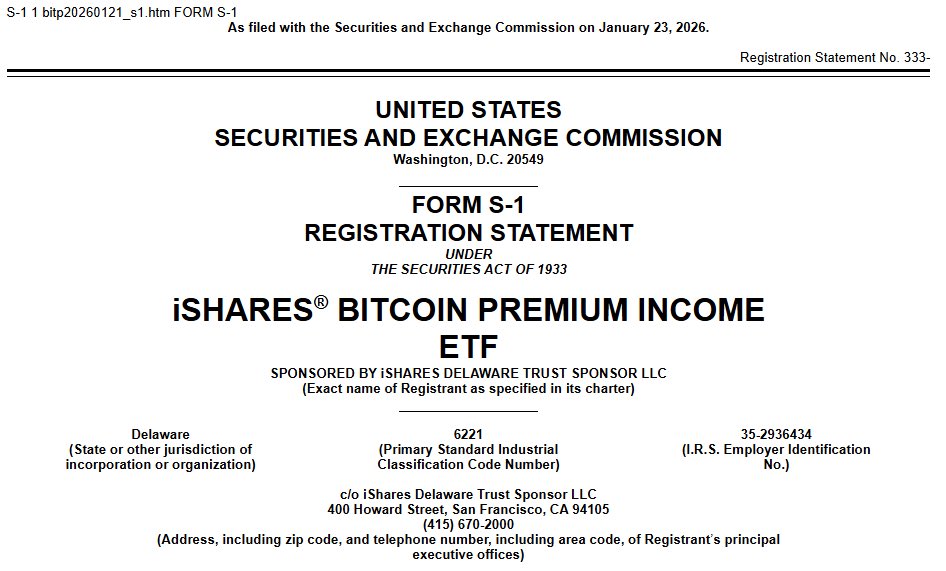
The SEC, long a fortress of resistance against Bitcoin ETFs, found itself facing an adversary it could not easily refuse. Fink had not merely filed paperwork—he had staked BlackRock’s reputation on the outcome.
On January 10, 2024, the gates opened.
The SEC approved BlackRock’s iShares Bitcoin Trust alongside ten other spot Bitcoin ETFs. Bitcoin stood at approximately $46,700 that day.


The impossible had become reality. The king of traditional finance had opened his citadel to Bitcoin.
Jan 2024: The Gates Open
BTC: $46,700-100,000
What followed exceeded all expectations.
Within seven weeks, IBIT crossed $10 billion in assets—the fastest-growing ETF in the history of financial markets. Institutional capital that had watched from the sidelines for a decade poured through the gates BlackRock had opened.
Fink’s about-face was not merely personal growth. It was institutional necessity. By 2024, Bitcoin’s market cap exceeded $800 billion—larger than silver, approaching the market cap of all gold ETFs combined.
The world’s largest asset manager could no longer pretend it did not exist.
In interviews, Fink spoke with the clarity of a convert:

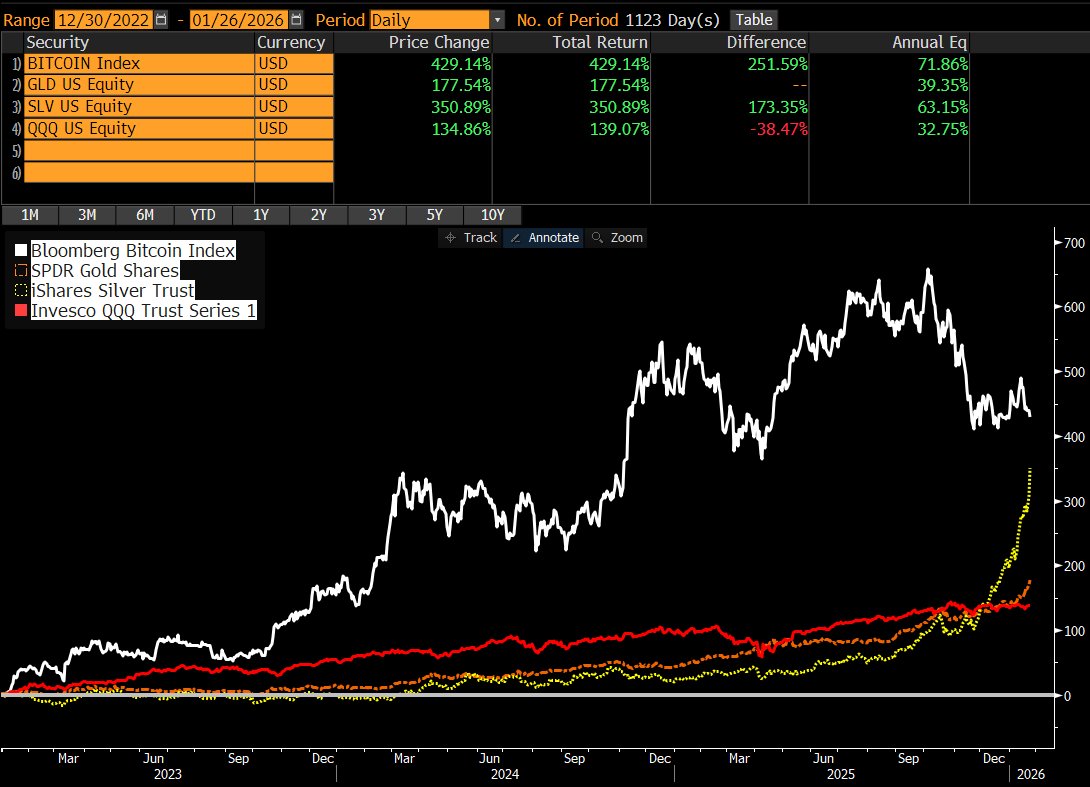
This was not the language of a reluctant adopter. This was the declaration of a man who had seen the future—and chosen to lead rather than be left behind.
Today: The New Order
BTC: $105,000
Today, iShares Bitcoin Trust holds 784,423 BTC—worth approximately $82 billion.
It stands as one of the largest single holders of Bitcoin on Earth, rivaled only by Satoshi’s untouched coins and the treasuries of the most devoted corporate accumulators.
BlackRock’s entry changed everything. Pension funds that would never touch Bitcoin directly could now allocate through a regulated ETF from the most trusted name in asset management. Insurance companies, family offices, sovereign wealth funds—all found their path through BlackRock’s gates.
Fink’s pivot was not merely a personal admission. It was a signal heard across every trading floor and boardroom in the world: Bitcoin had crossed from fringe speculation to institutional reality.
The old king of finance had not merely accepted the new order.
He had become its gatekeeper.
Whether you view his transformation as wisdom or opportunism, one truth remains: when Larry Fink opened BlackRock’s gates to Bitcoin, he opened them for all of traditional finance.
And the flood that followed changed the landscape forever.
The iShares Bitcoin Trust launched January 11, 2024, and now holds 784,423 BTC. Bitcoin’s price on launch day was approximately $46,700.